The file arrives verified. You never ask for a login
Statements as real PDFs, bank data before you fund, UCC, EIN and identity checks already done. Read the file, set your own terms, fund. No funding call.
- No bank logins
- The merchant connects their own account
- No funding call
- What it verifies is already on the file
- You post the terms
- Never our credit decision
- No sales call
- Apply and onboard yourself
The zero counts New Matrix routed deal flow: a routed file is never listed, sold or recycled. The Lead Marketplace carries vendor inventory only, never a New Matrix merchant.
Named systems, not a promise
Under every file you open.
- Bank data, read-only
The bank read lands on the file. Nobody sees a login.
- Identity and business verification
Registry checks and document review on every file.
- E-signature, in-house
Hash, version, timestamp, IP and user agent.
- Encryption, at rest and in transit
TLS 1.3 in transit, AES-256 at rest.
- Audit trail, hash-chained
Append-only. Tampering breaks the chain.
Pick the door that fits how you make money
Fund more of the right deals, from one operating layer
Everything a funder runs a desk on:
What arrives
- Box-screened files
- Missing proof flagged on every file
What you run
- Pipeline and stages
- Team and reps
- ISO book
- Contract paper
- White-label branding
- Call-floor workflow: dispositions, next action, touchpoints
- Today view, leaderboard, analytics, webhooks
The CRM is included, not a bolt-on you pay for twice.
Free to join. Free to run your desk. You pay only on deals you fund
You fund at your buy rate. No subscription, no platform fee, no seat licenses, no charge for routed deal flow. Nothing out of your pocket.
| Product | Standard | Range per deal |
|---|---|---|
| MCA | 2% | 1% to 3% |
| MCA refinance | 1.5% | 1% to 2.5% |
| Consolidation | 1.5% | 1% to 2.5% |
| Term loans | 1% | 0.5% to 2% |
| Lines of credit | 1% | 0.5% to 2% |
| Equipment finance | 1.25% | 0.5% to 2.5% |
| SBARegulated. Lender-paid only, never charged to the applicant. | 1% | 0.5% to 2% |
| Business credit cards | $50 to $200 per approved account. Issuer bounty, never a percentage | |
Rate inside the range follows paper grade, term, position, and volume.
- MCA-family spread settles out of the merchant's rate per funded deal, never invoiced to you, recognized on most positions once your deal is in profit. A deal that never funds costs you nothing.
- No card at signup, and none to use the desk. A payment method goes on file before routed deals, bought leads, or funding through New Matrix. Adding one costs nothing. New Matrix only charges after you have made money on a deal, are in profit, or buy something. No signup fee, no subscription, nothing up front.
- $5M+ in routed funded deals per quarter qualifies you for negotiated schedules.
- Full terms: Section 2 of the Lender Master Agreement, signed at onboarding.
This is the desk, not a deal feed
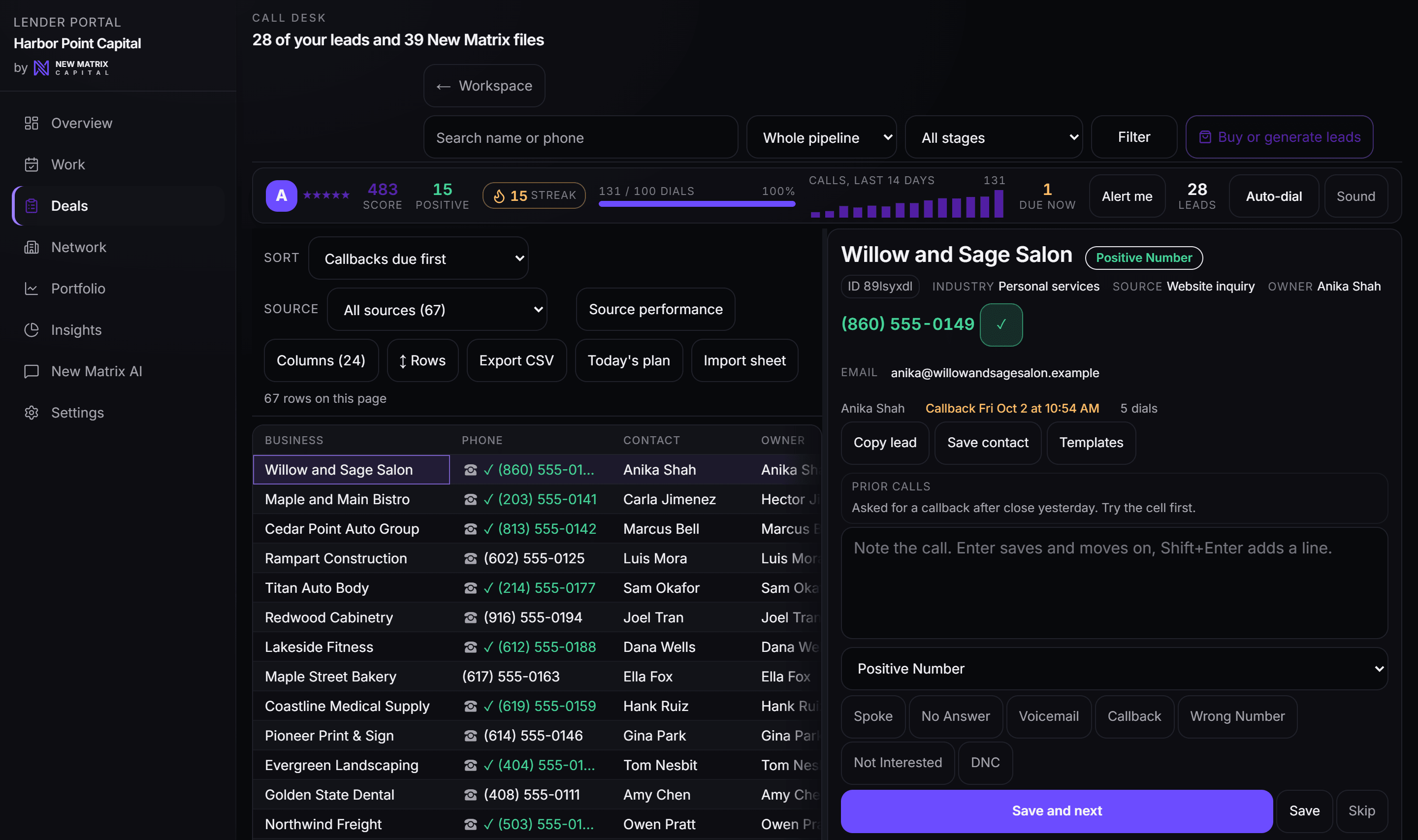
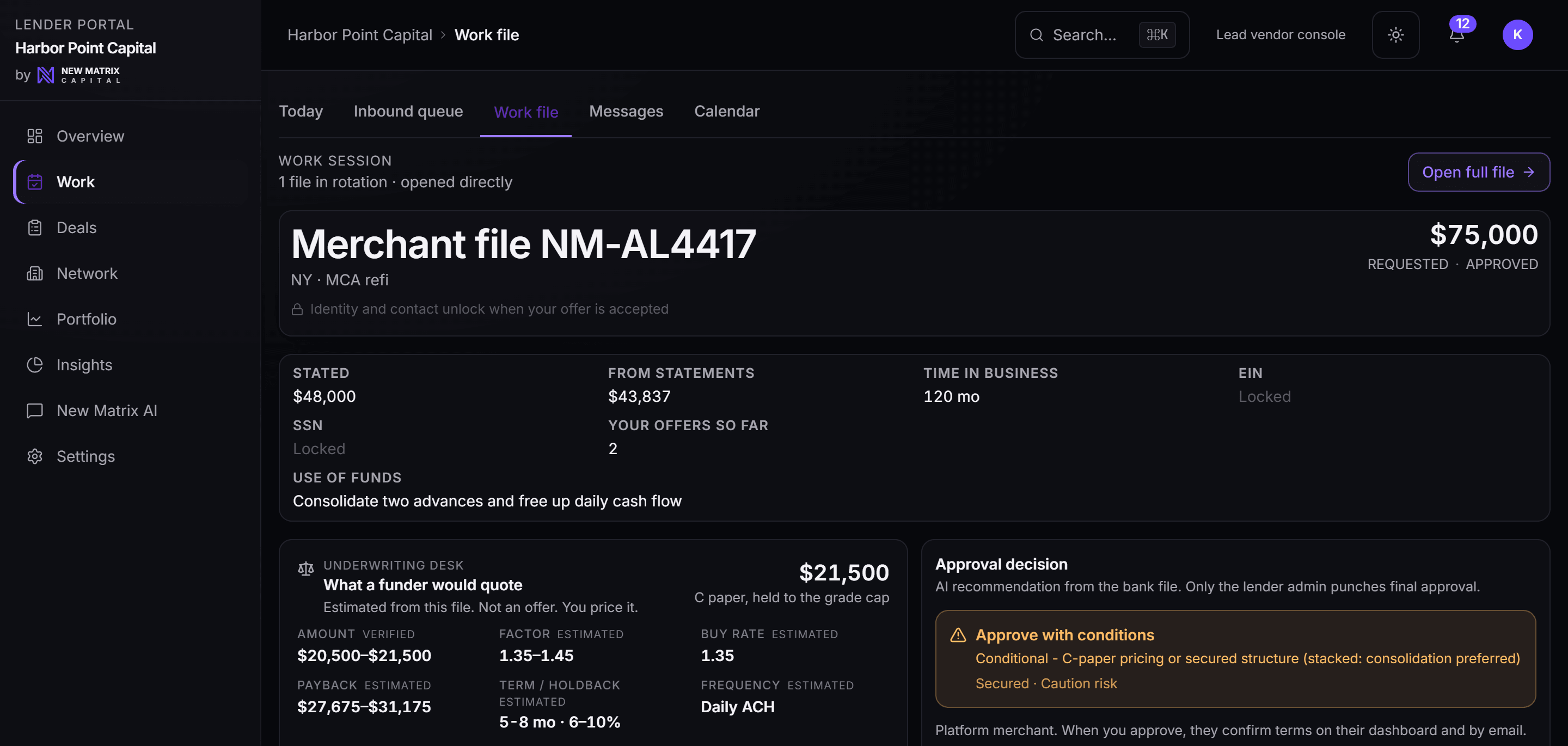
One routed file at a time: the merchant, the ask, the evidence on file, and the decision your rep makes on it, right here. Hotkeys move the desk to the next file without leaving the queue.
Deal queue and pipeline
Routed files land in your queue with source labels and move through your stages.
Box-rule evaluation
Product, state, revenue, amount and time in business. Screened before review.
Underwriter leaderboard
Volume, speed and win rate. The gamified CRM your reps actually open.
Live analytics
Funnel, decline reasons and portfolio health, refreshed as deals move.
Portfolio rechecks
Re-check risk on any funded deal from the latest stored statements and connected activity.
New Matrix AI, your co-pilot
The desk recommends an offer you control. Estimates carry their evidence, and a missing input says why.
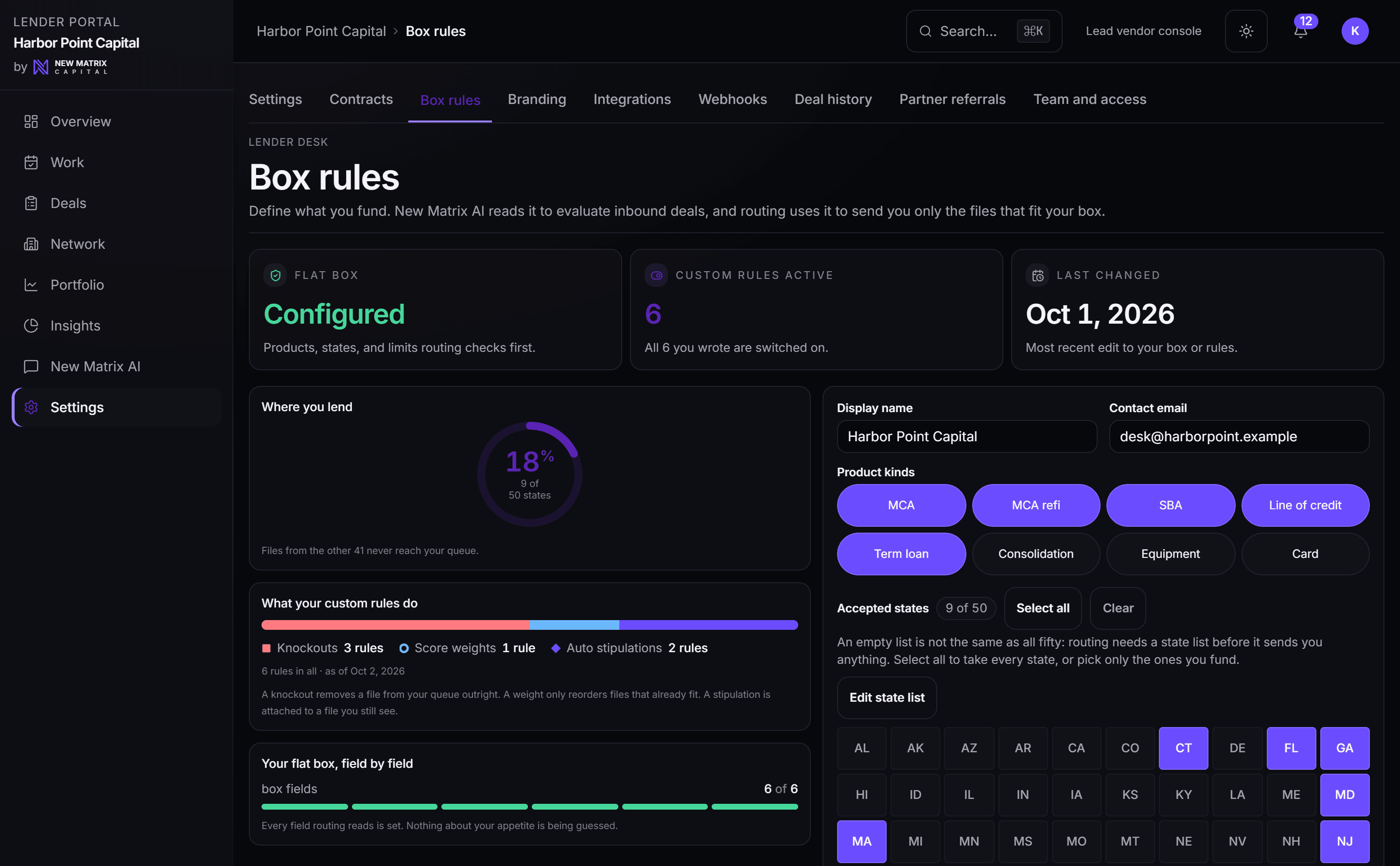
Configure Your Box Once. We Do the Filtering
You set the box: state, product, minimum revenue, maximum amount, and time in business. The screen supports your review; it does not automatically decline a merchant or make a credit decision.
New Matrix AI pre-evaluates every deal against your box and keeps missing evidence visible; the desk recommends, your team decides.
A file lands in your queue only after the merchant authorizes the share and it clears your box, with source labels and missing evidence marked.
Match, stips, terms. Each one a record
The three steps your desk already runs, with the email thread taken out of the middle.
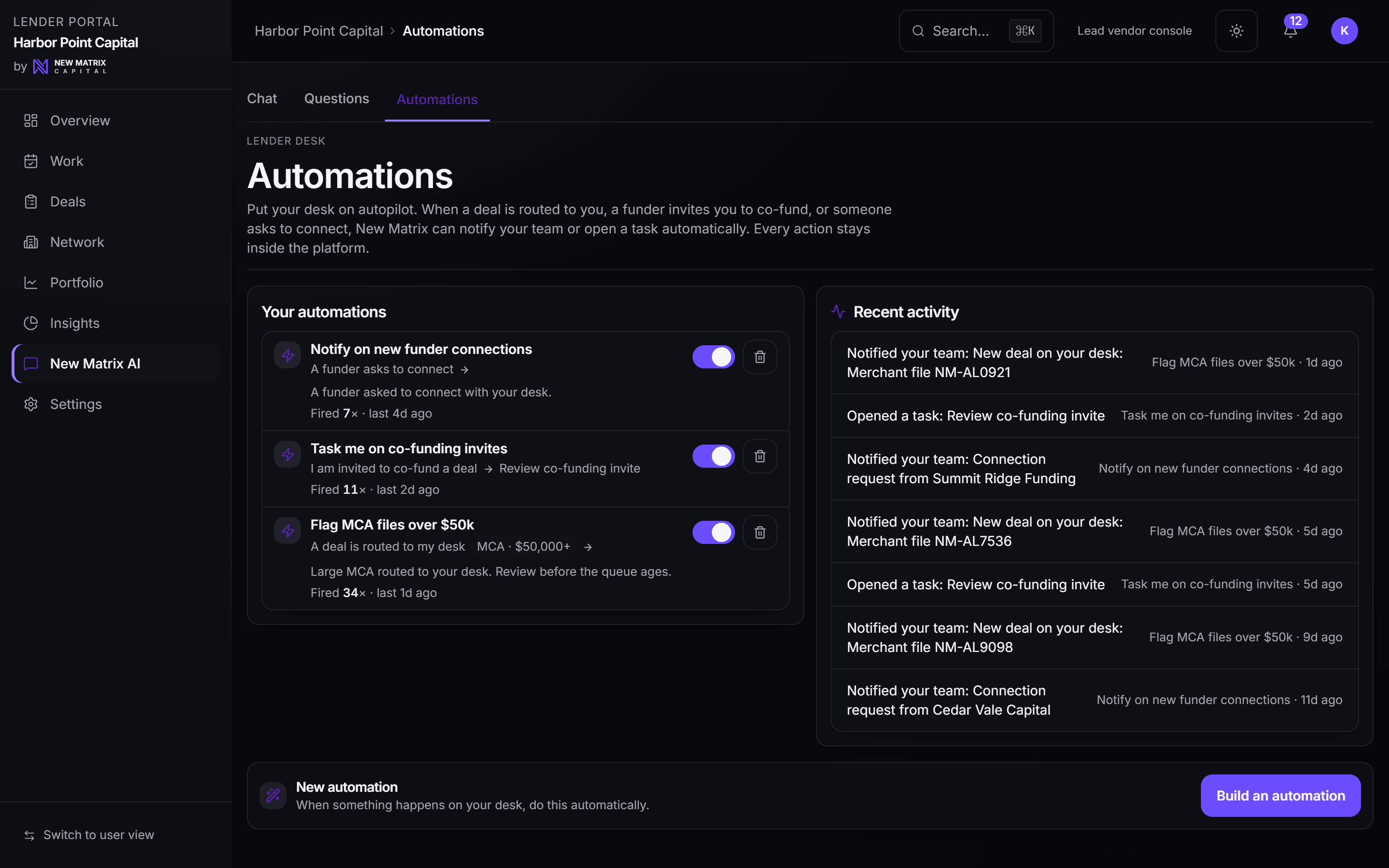
Your rules run the desk. A routed file can open a task or ping your team the moment it lands.
- 1Match
Your box decides who sees the file. One that fails a rule never reaches you.
- 2Stips
Ask the file first. If the evidence is there, the stip returns satisfied, with the source named.
- 3Offer
Terms post as fields: amount, term, rate, payment, fees, expiry. Every revision versioned, every decline reasoned.
Stips the account can answer satisfy themselves. At funding, the whole file downloads as one package.
A match is not an approval
Clearing your box makes the file eligible for your review. New Matrix does not approve, decline or price. Your desk does.
Term sheet to executed copy, on the deal
Accepted terms become signed paper without leaving the desk.
Term sheet from the accepted offer
Restates the terms the merchant accepted. Nothing retyped.
Your paper, or a drafted start
Upload your agreements, or start from a draft with every unknown left blank.
Templates you version and control
Named templates, draft or active. A draft reaches no merchant.
E-sign to executed PDF
Signed in app with E-SIGN consent on record, filed on the deal.
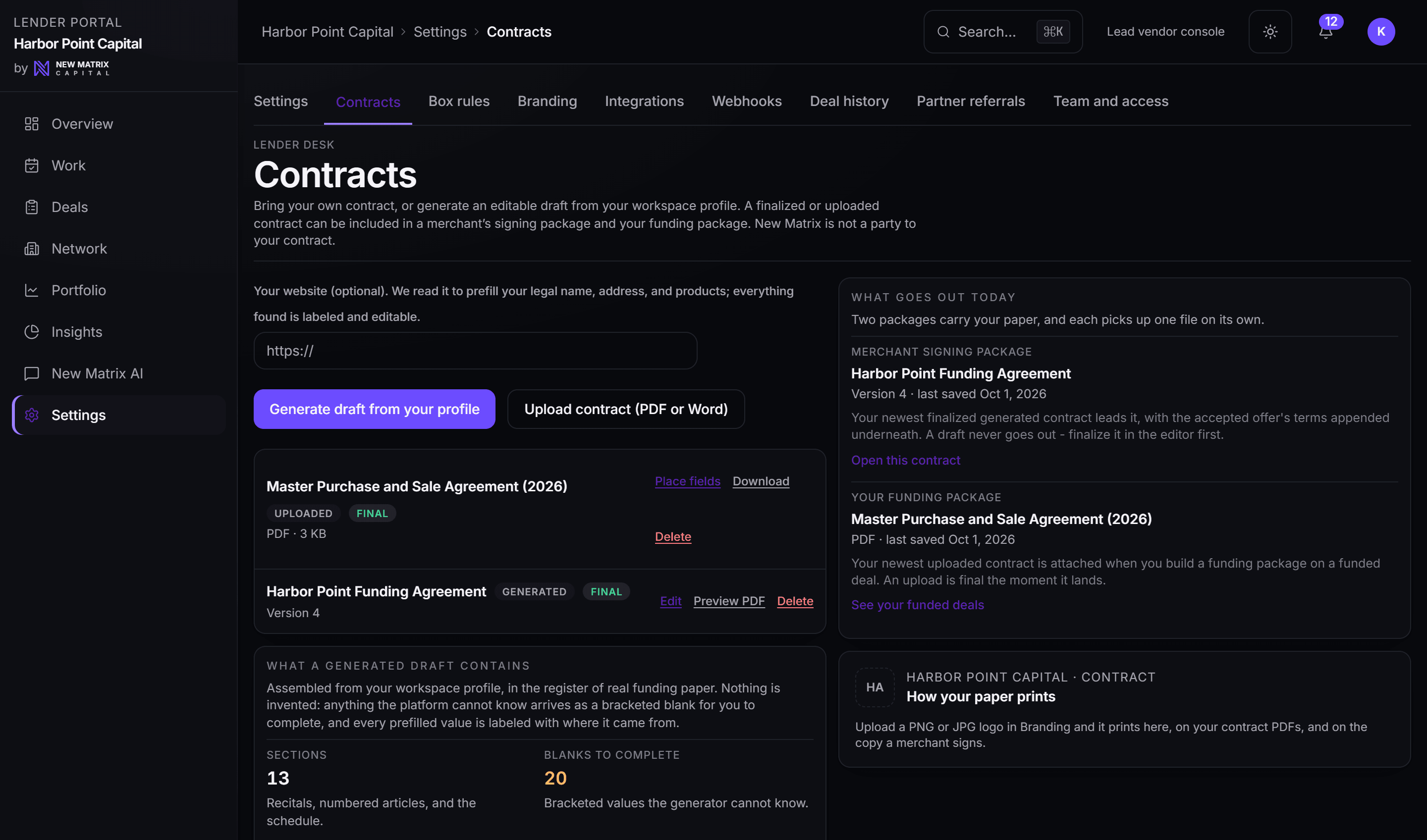
Your paper, its version, and which package carries it.
A consented file, not a forwarded email
Two things put a file on your desk: the merchant authorized it, and your box passed. It goes to every box it fits on an active desk, at once. No queue, no gatekeeper.
If a merchant did not authorize it, you never see it.
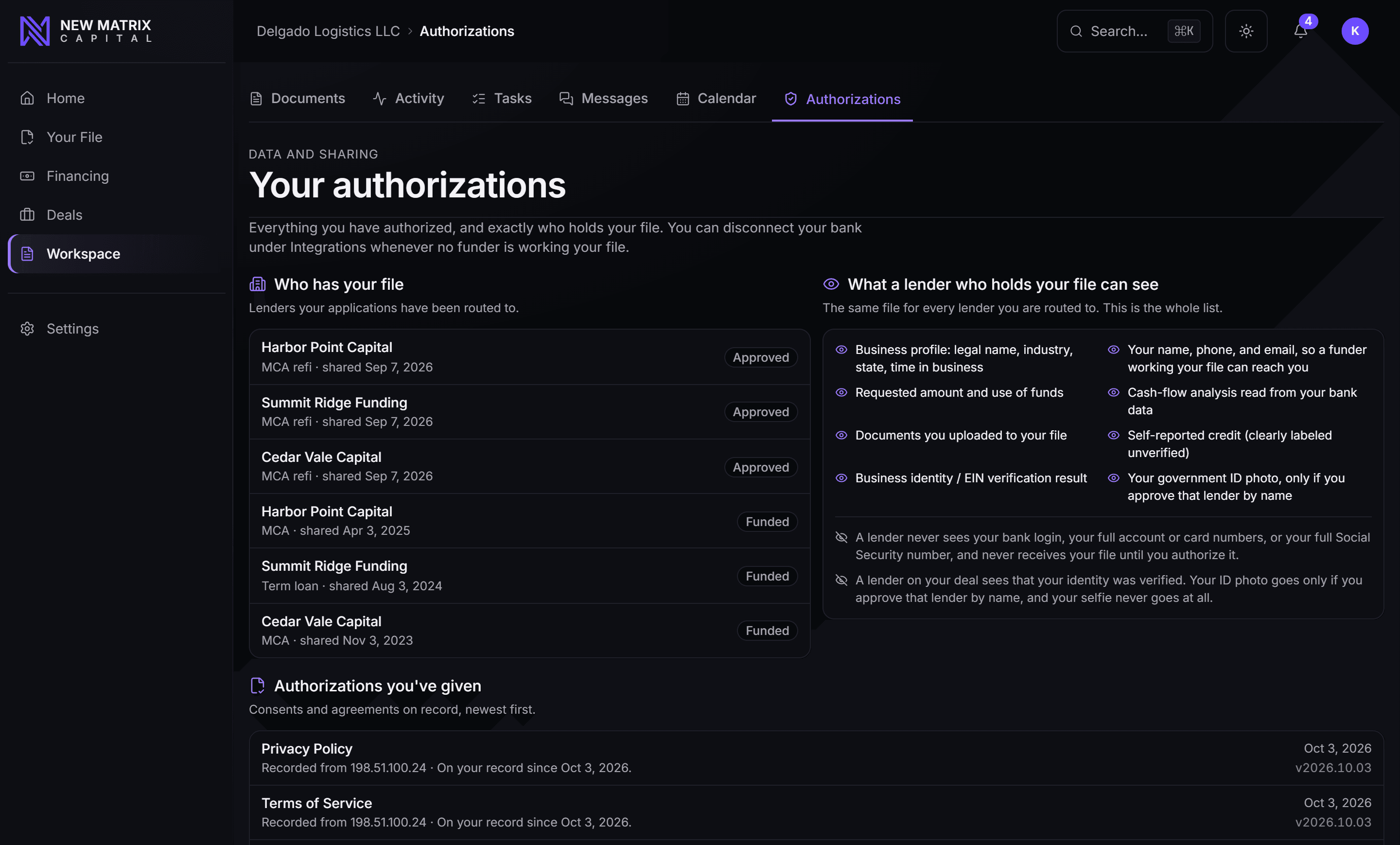
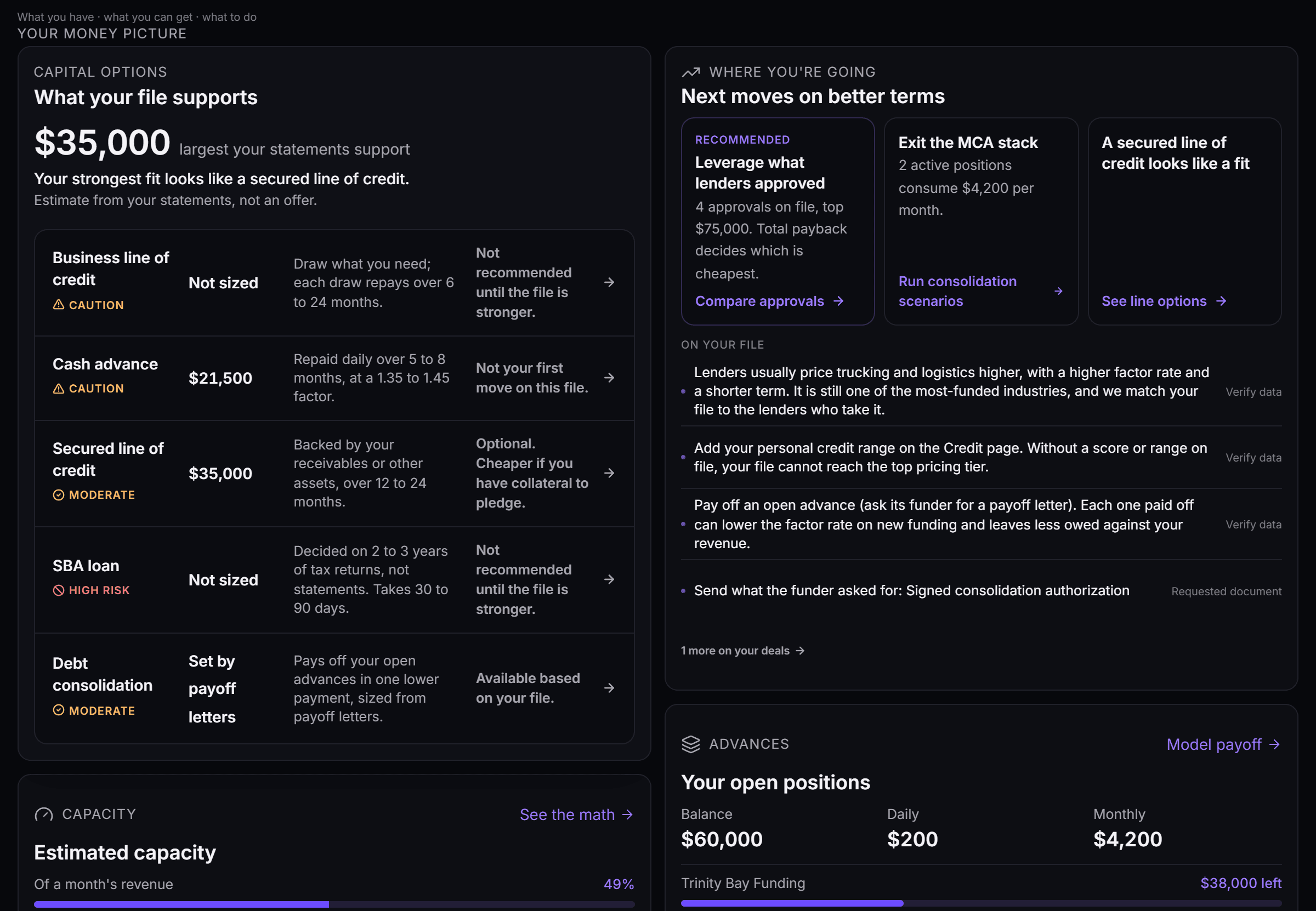
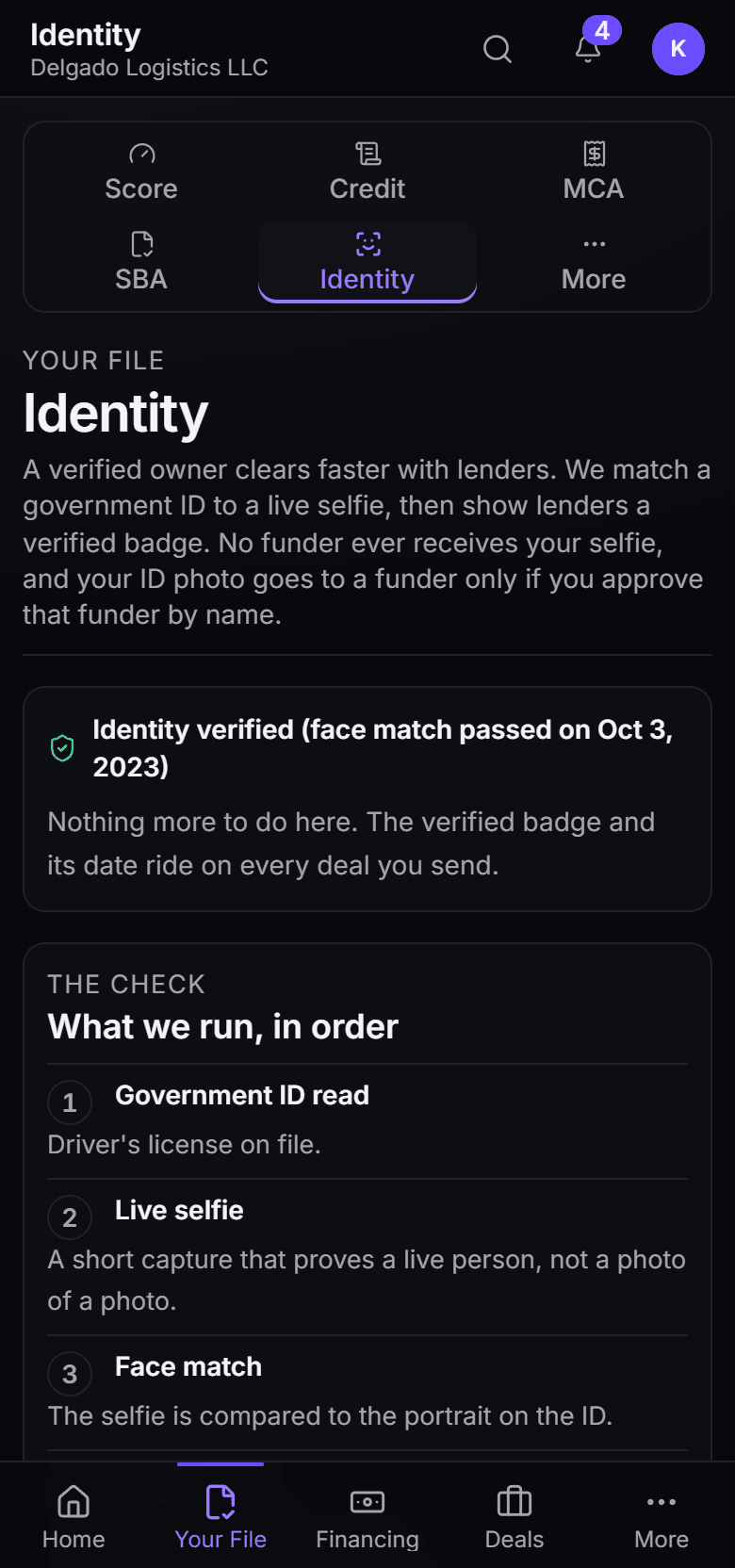
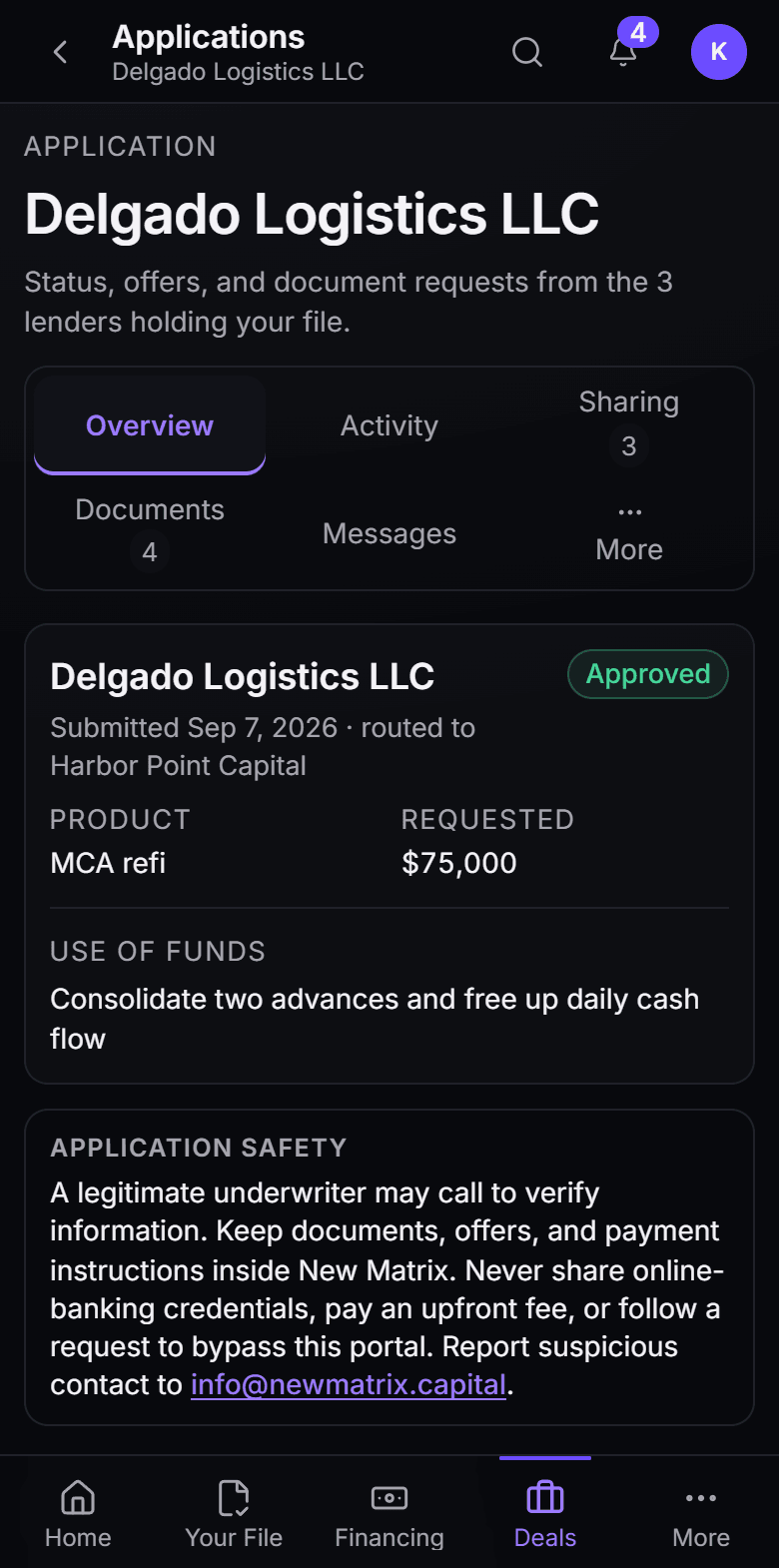
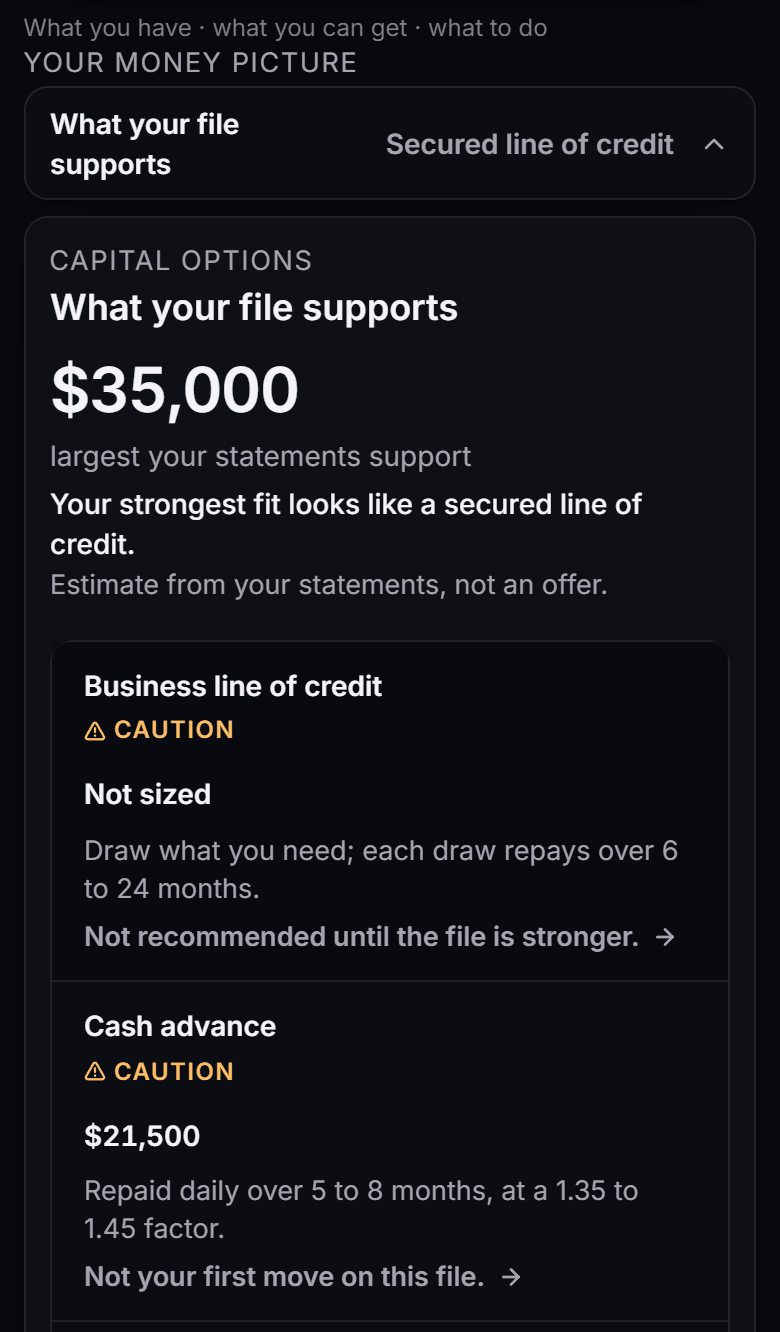
The merchant's own record: who holds their file, what each desk can see, and every authorization on it.
The entity, as filed
Legal name, EIN last four, state, time in business, and the signer.
The account, month by month
Transaction-level reads, month-to-date totals, daily balances, deposits and debits, original PDFs, and saved annotated copies.
Positions in the account
Daily and weekly debits found beside what the merchant disclosed.
Documents, with their source
Voided check and documents on the deal, labeled with source. ID photo only if the merchant releases it.
The box note
Which of your configured rules the file cleared.
The consent artifact
Who authorized the share, when, and every desk that received it.
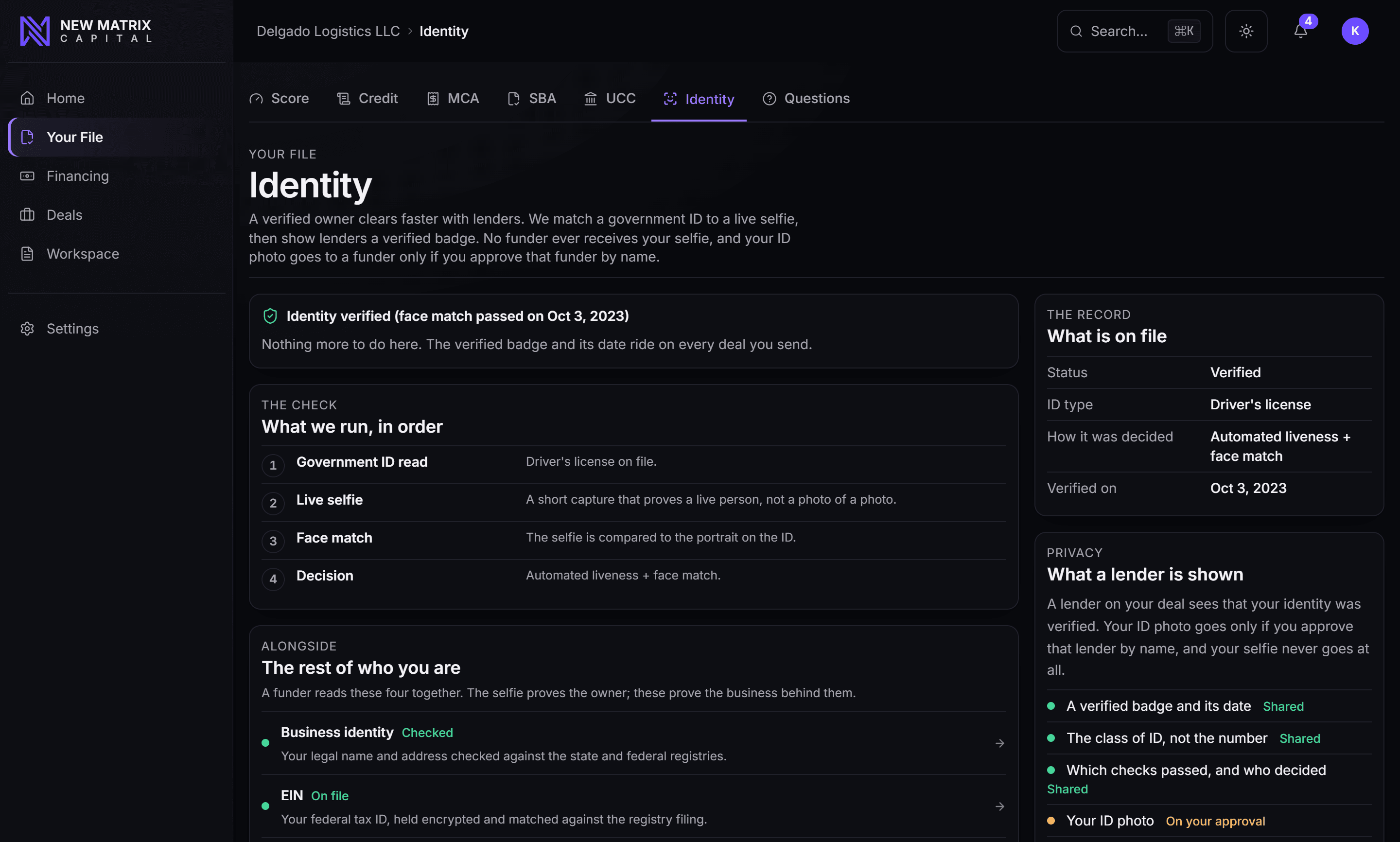
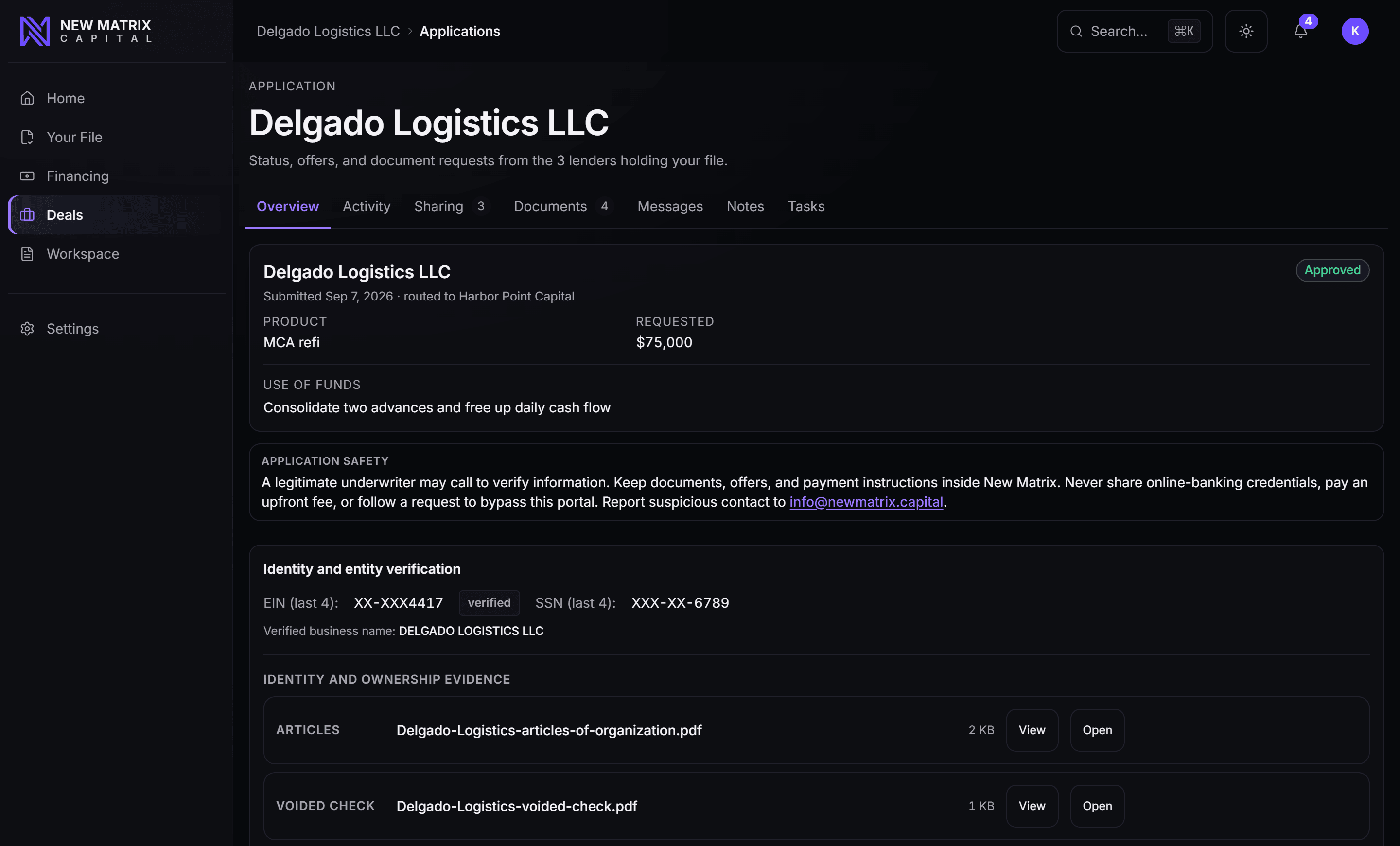
Every field says where it came from
Plaid, the registry, and identity checks answer at the source, and every number lands carrying the label that returned it.
Verified
From the source, not the merchant.
- Account ownership and transactions
- Business registry record
- Signer identity, with face match
- Signed terms, hashed and timestamped
Stated
Typed by the merchant. Never dressed up as evidence.
- Requested amount and use of funds
- Revenue as the merchant reports it
- Advances the merchant discloses
- Industry, picked from a fixed list
Derived
Computed here, with the inputs kept beside the answer.
- Deposits and balances, month by month
- Daily and weekly debits found in the account
- Time in business
- Box fit against your rules
Where a stated figure and the account disagree, the gap is on the file. One number never quietly wins.
A missing input reads unknown, never zero. A statement we cannot parse comes back unreadable, with the reason.
Every routed file is on the record for six months
Files that clear your box arrive in real time with bank data, documents, and MCA history labeled. Your team underwrites.
Every deal keeps its owner. The partner who brought the deal keeps it. No backdooring, no poaching, no one cut out.
Buy leads. Compete with everyone
Same statements, shopped everywhere. You underwrite for an hour, then the file resurfaces tomorrow under another broker.
- Paid leads with low intent
- Race to bottom on price
- No record of who saw what
Free leads. Exclusive window. Audit log
A file stays private until the merchant authorizes the share and it clears your box. Every platform touch writes an attribution audit trail: who saw the file, and when. The anti-backdoor audit log proves source on every funded deal. No commission disputes.
- Routed files are applications, never lead lists
- Six-month anti-circumvention on every routed file
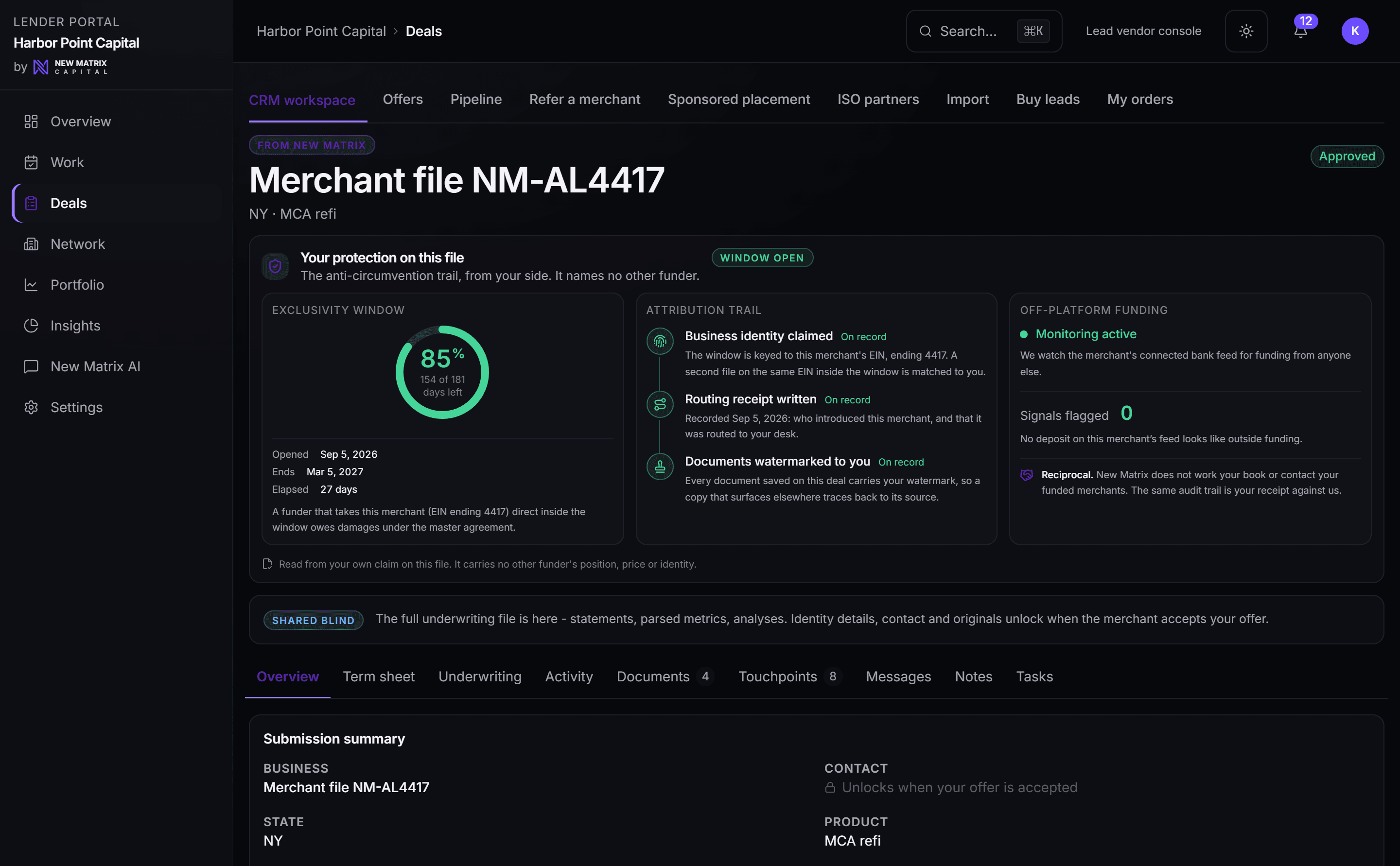
Your desk, your files, your numbers only
Five desk roles, owner to viewer, each capped at what it can touch. What the desk across the street sees: nothing. No automated flag is proof of fraud without human review.
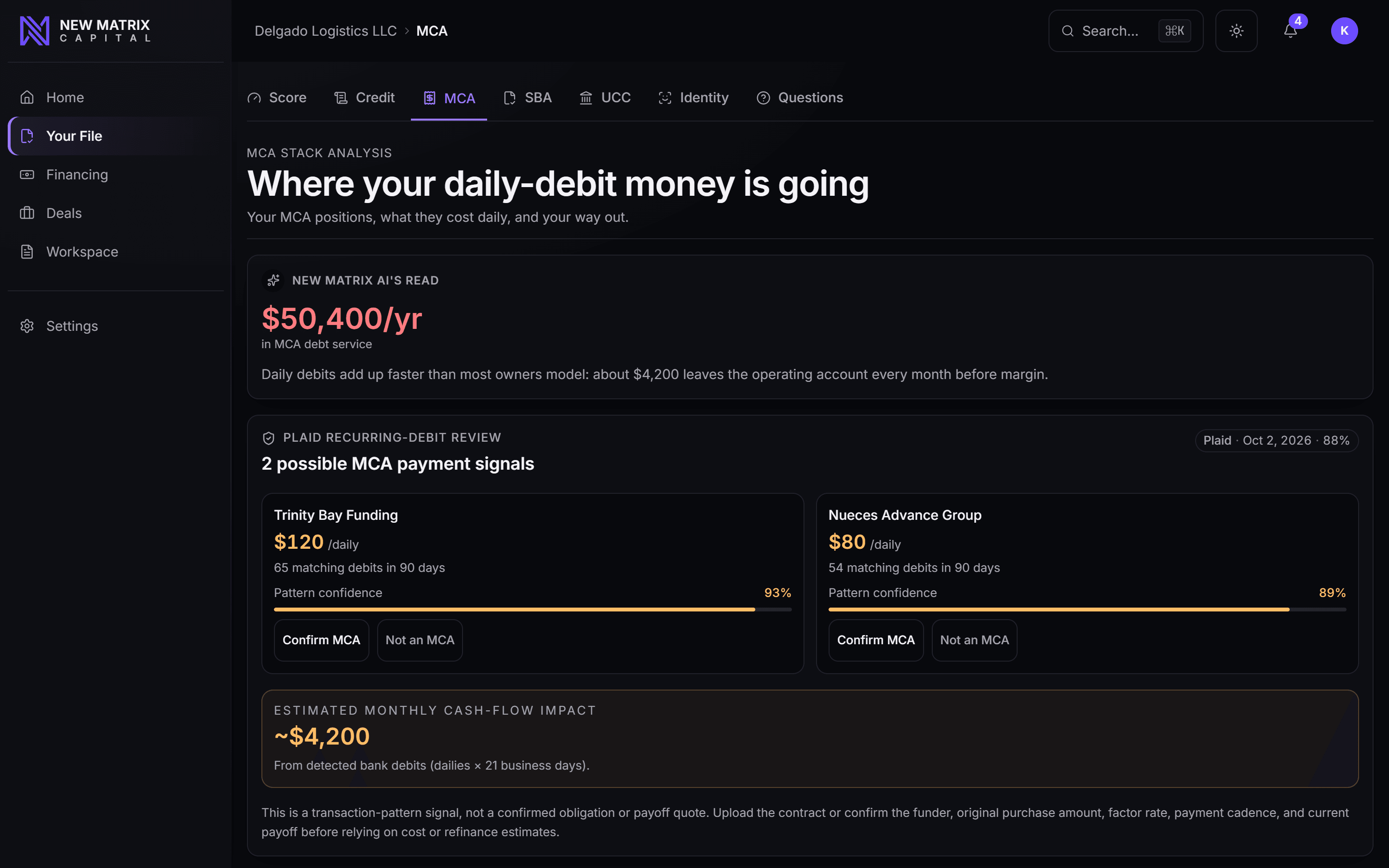
Positions found in the debits, with the confidence behind each one.
A file opens for the desks that received it
Access is the routing receipt, not the URL. A guessed deal reference returns nothing.
You never see a competing offer
Not the rate, not the amount, not the funder, not how many are on the file.
You do see where you stand
A band on your own offer: stronger than most, about average, weaker than most.
Exports carry your name
Downloads stamped with your desk and the deal reference. The manifest names anything that could not take the stamp.
Screened before your queue
- Statement review
OCR-parsed, conflicts flagged on the record. A statement that cannot be read is labeled unreadable, never a $0 month.
- Duplicate merchant signals
Repeated merchant and EIN references are restricted before your queue.
- Identity conflicts
Conflicting names and entities stay labeled, never silently merged.
- Stack activity
Parsed debits and disclosed positions surface stacking before you fund.
Fund it without the funding call
Fake signer, wrong account, fake business, misquoted terms. Four controls, and the evidence travels with the deal.
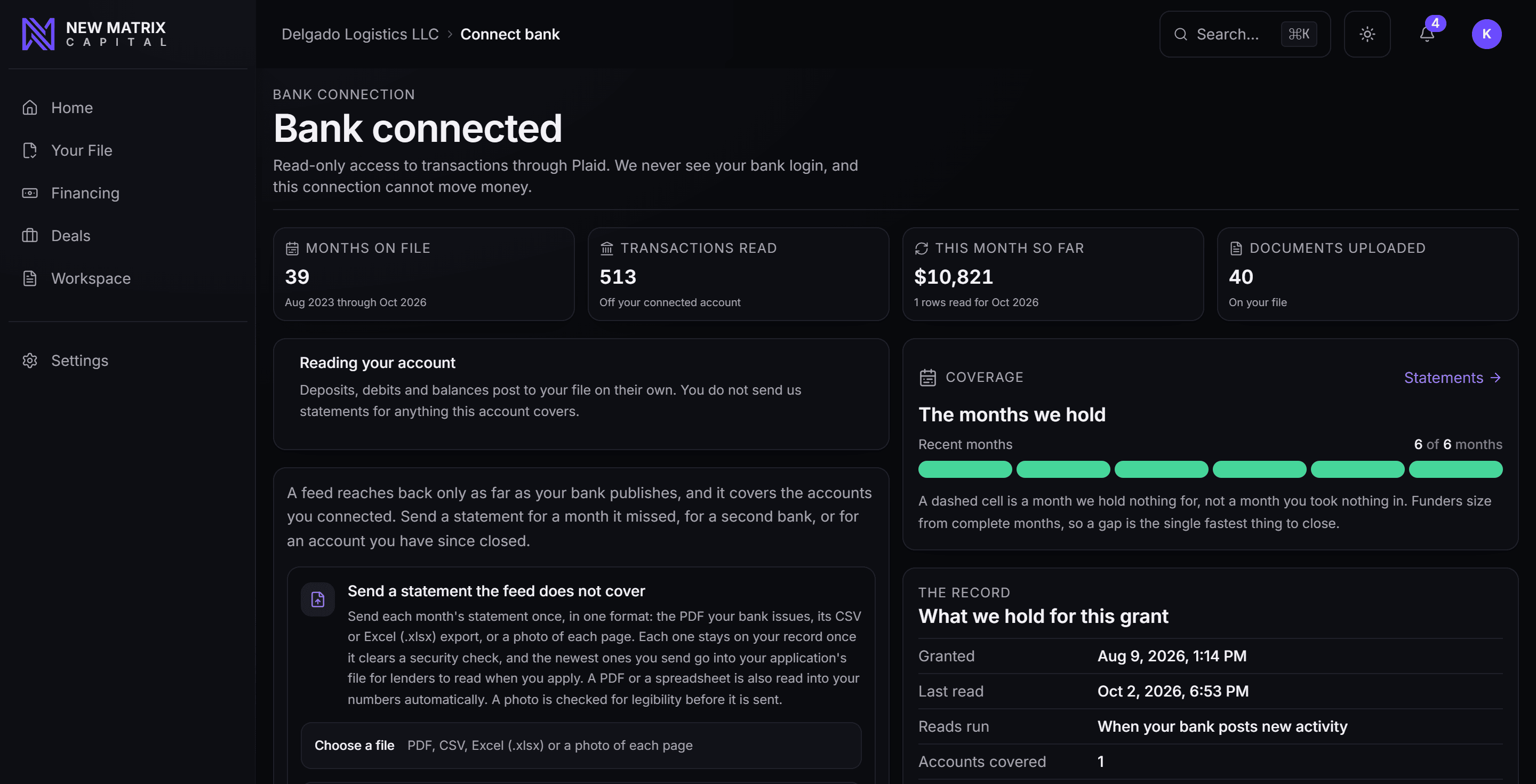
The bank records come from the merchant. Nobody hands over a login.
| What could go wrong | How it is controlled | You receive |
|---|---|---|
Is this a real, authorized signer? | Government ID and a face match from the signer, reviewed before the file is final. Never handed over by a broker. | Pass or fail, tied to the named signer. |
Does this account belong to them, and are these statements real? | Deposits and debits read from the merchant's own bank records, each labeled with where it came from. | The bank records behind every figure, each labeled with its source. |
Is this a real, operating business? | The entity checked against registry records, plus cash flow from the account. | The entity, confirmed and tied to the signer. |
Did a broker promise something not in the contract? | The merchant e-signs the exact published terms in-app. No broker term sheet exists to contradict them. | Immutable consent record: document version, timestamp, IP, user agent. |
A synthetic merchant has to defeat all four at once. We never claim a check ran that did not.
Business credit arrives source-labeled in every file. Consumer credit stays your pull, under your own permissible purpose.
Standard buy-rate and sell-rate spread, with a provenance trail on every file. Nothing undisclosed, and you authorize the ceiling.
Bigger than your box? Split it
Syndicate a funded deal to a desk you are connected with, or take a piece of theirs. Each side holds a set share of the advance and the return; the split is a recorded row on the deal, and each desk sees only its own side of it. Your book, your pricing and your merchants stay yours.
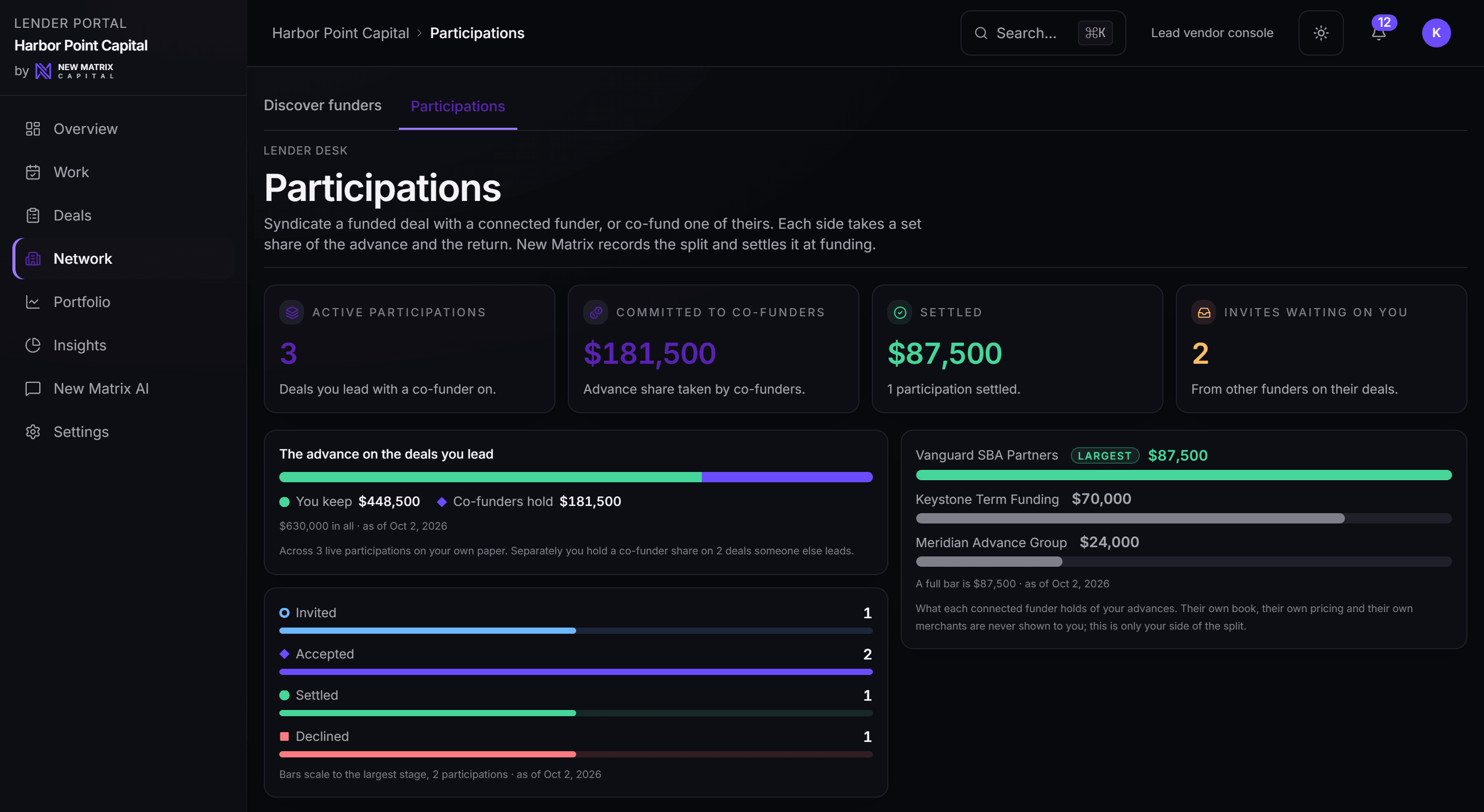
What you lead, what you hold, and who holds what.
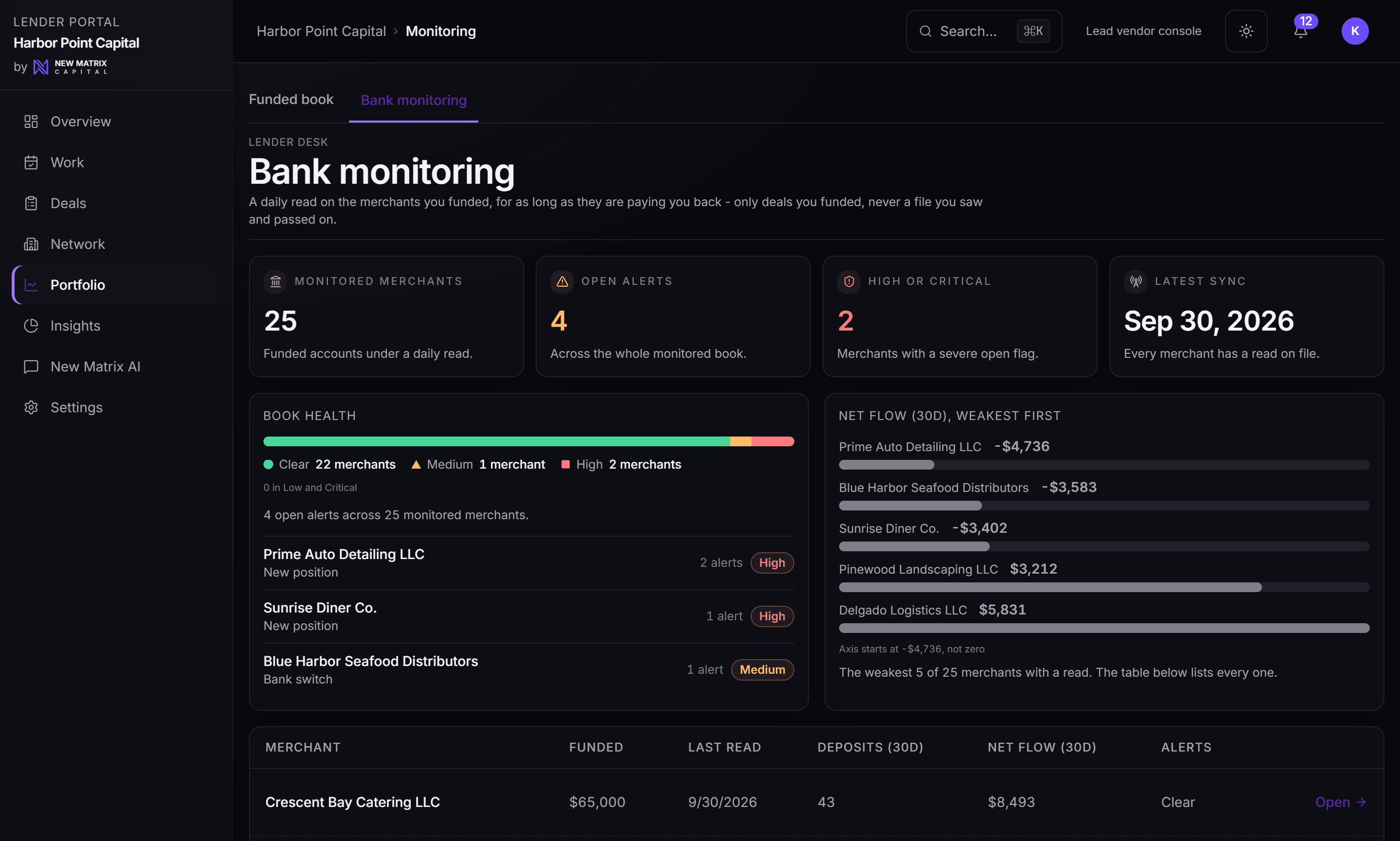
Recheck any funded deal on demand
One click reruns the risk review from stored statement analyses and connected-bank activity. Only deals you funded appear, and changes surface as review signals, never as proof of default.
Lenders ranked on funding speed, offer rate, and volume
Partners are scored on what they do here: deals funded, dollars deployed, offer rate, decision speed. Standing earns you visibility on this page, not a place in anyone routing decision - files reach the desks whose box rules they fit, and standing never reorders that. Merchants rate your desk after funding; the rating shows across the network.
Earned, never bought: fund well and fast, and the top is yours.
- Window
- Rolling 90 days. Older activity is not counted.
- Who is ranked
- A desk enters the board after one funded deal or one offer posted in the window. The board publishes only when 3 or more desks qualify.
- No observation
- A desk with no posted offer scores the decision-speed factor neutrally rather than at zero.
- Method version
- v2026.09.07
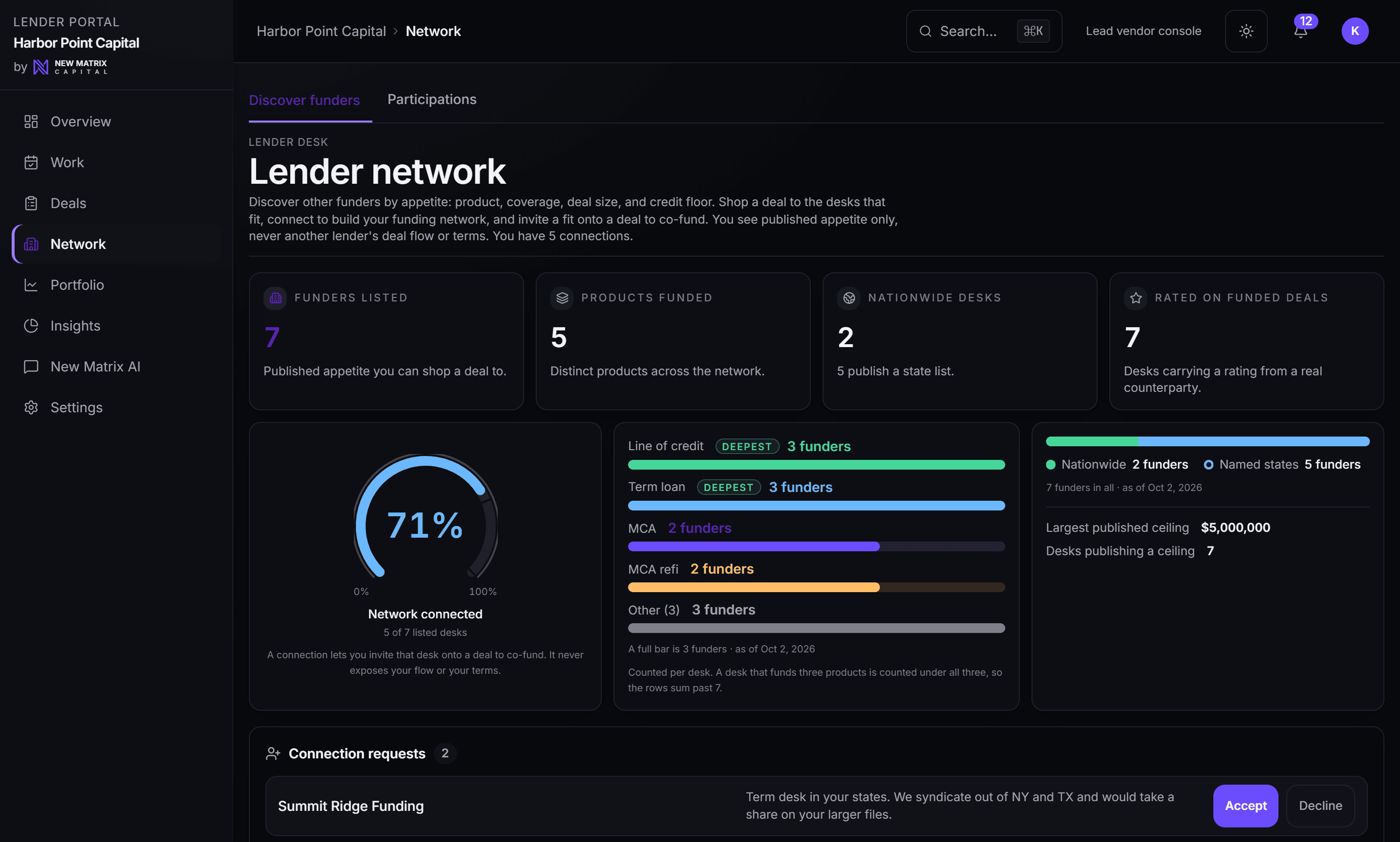
Bring the deal. Keep the merchant. Get paid on every one that funds
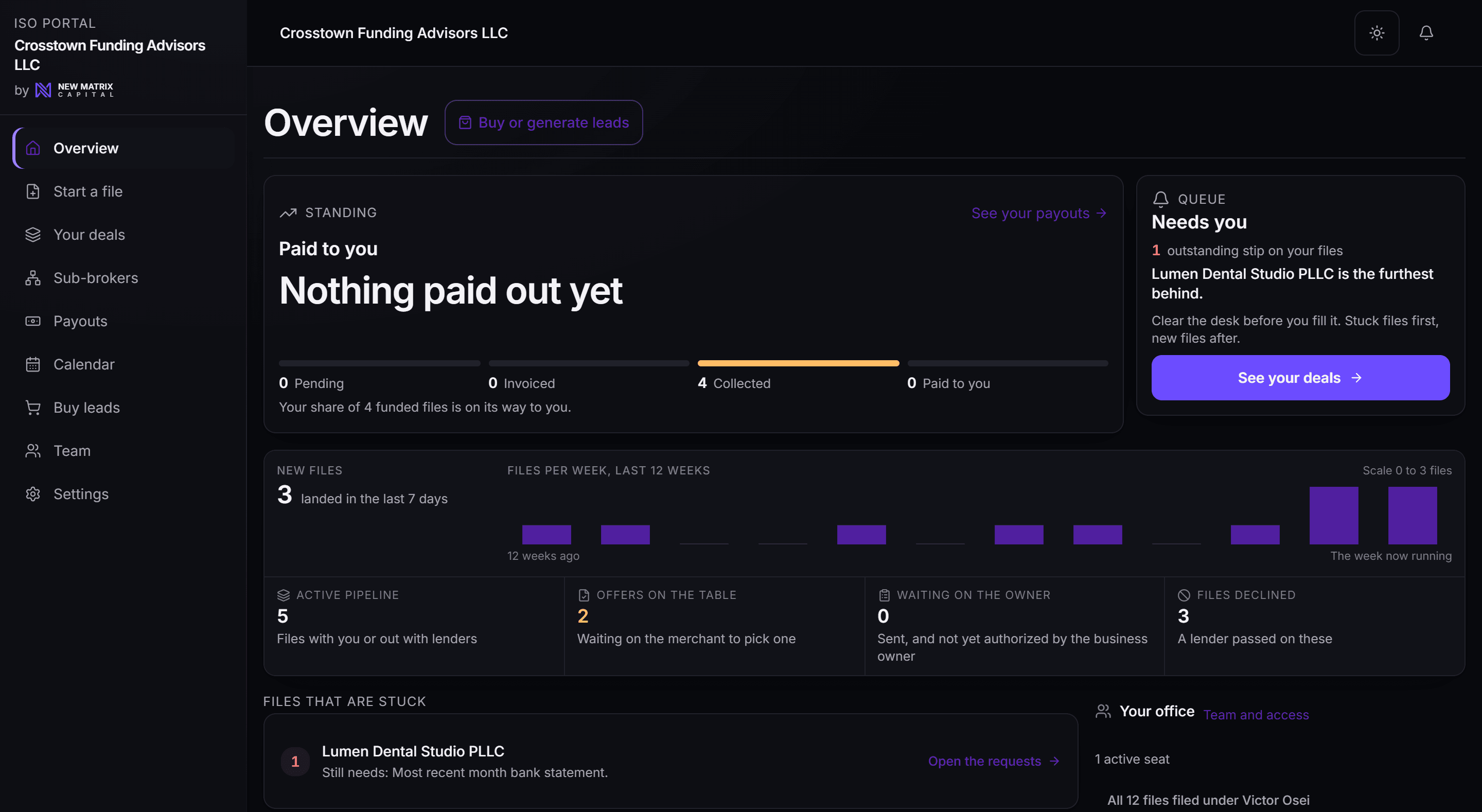
Your shop desk: pipeline, splits, and every file attributed to your book.
ISO shops
Run your shop on our rails. Your paper, your reps, your sub-ISOs, your split schedule.
- Your contract paper and branding ride on the file
- Reps and sub-ISOs report into your own desk
- One ledger for the whole book, tracked to the dollar
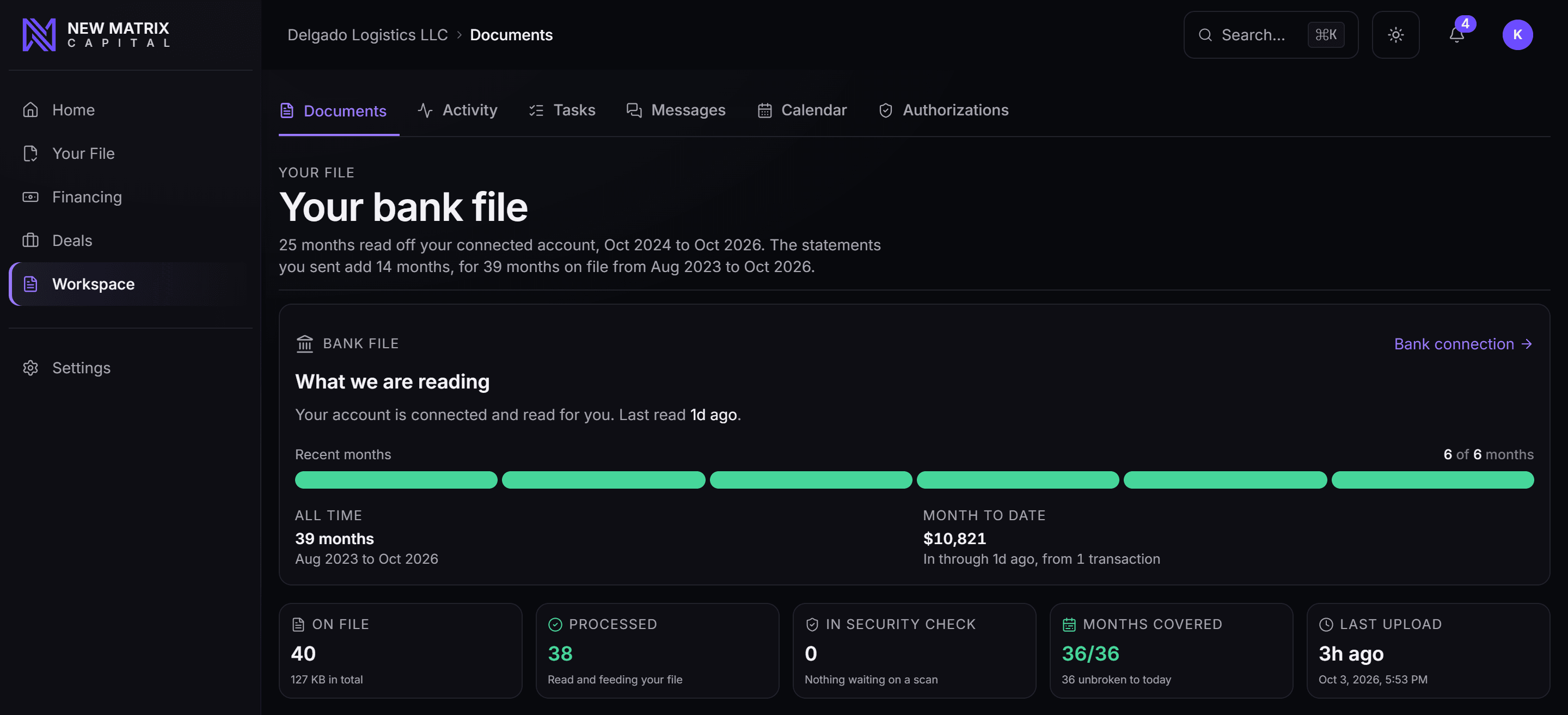
Brokers
No shop to run. Send the file, we run it to every open funder whose box it clears.
- Attribution locks the merchant to you, reload included
- Bank data read, positions mapped, stips flagged before submission
- Every funded deal posts your cut to the ledger
Your split, agreed per relationship. Not a platform-wide rate
Nothing comes out of your split for running the file through the desk.
- Your split is on file before your first deal: up to 50% of the platform's points on a deal you source. It divides our points, never the merchant's rate.
- Earnings accrue on the ledger, visible to you, and a row reads paid only once the money has moved.
- ISO and broker applications get an answer within one business day.
- Sub-broker seats are tracking only. You see their book and their splits, with no separate login and no automatic sub-payouts.
8 ways to sell a lead. Exactly how you already do
List once, reach verified funders and brokers, and keep your own terms. If you already fund or broker here, your listings run from the same login.
Files routed through New Matrix are never sold or recycled. The marketplace is separate: only what a vendor lists as merchandise.
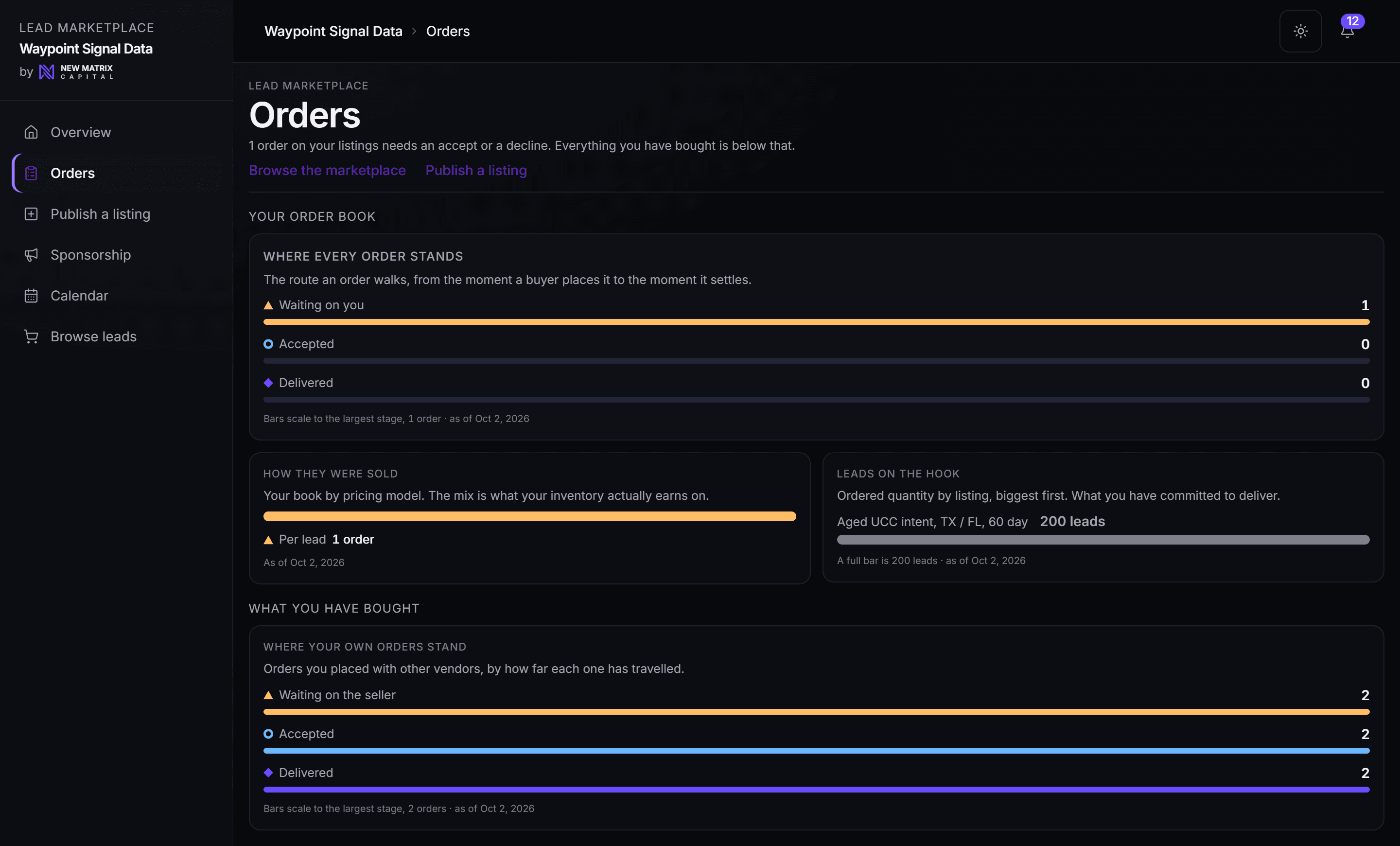
Every order on your listings in one book, by stage and by pricing model.
- 01
Per lead
A flat price per lead. Exclusive to one buyer, or shared across a few.
- 02
Only when it funds
Nothing up front. You take a cut of the deals that actually close.
- 03
Live transfers & appointments
Bill per phone-verified transfer or booked meeting, priced by your filters.
- 04
Data lists
Business name, owner, phone, email, and socials, sold by record.
- 05
Aged leads
Move 30, 60, 90+ day inventory down a freshness curve instead of letting it sit.
- 06
Full packages
Submission-ready files: application, bank statements, and voided check.
- 07
UCC & intent data
Merchants with open filings or buying signals, one-off or as a recurring feed.
- 08
Revenue share
No price tag. Split the commission with the desk that closes it.
Real funders and brokers, screened before they can buy.
Earnings and attribution accrue on the ledger, and a row reads paid only once the money has moved.
TCPA and DNC tooling travels with every list you sell.
Want a listing seen sooner? Sponsor it for a flat daily rate. Sponsored rows sit in their own labeled band, never displace a better-fit listing, and a buyer can switch them off.
See advertising termsChoose the right partnership path
Large volume or API integration
- API and dashboard integration
- Custom access windows and box rules
- Post-funding monitoring requirements
- Commercial and referral structure
Apply to fund deals
One pass: contact, box, consents. Active as soon as onboarding completes.
Reviewed within 1 business day. The one-time setup link arrives by email. We never email passwords.
Approval is not a volume promise. What reaches your queue depends on merchants applying and on your box.